Introduction
On the YouTube platform, many creators don’t intentionally infringe copyright, but rather step into “minefields” due to misunderstandings of copyright rules, leading to video takedowns or even channel strikes. Prevention is better than cure! This article will reveal the five biggest copyright misconceptions creators often make and provide a practical checklist to help you avoid these “copyright traps,” making your creative journey smoother.
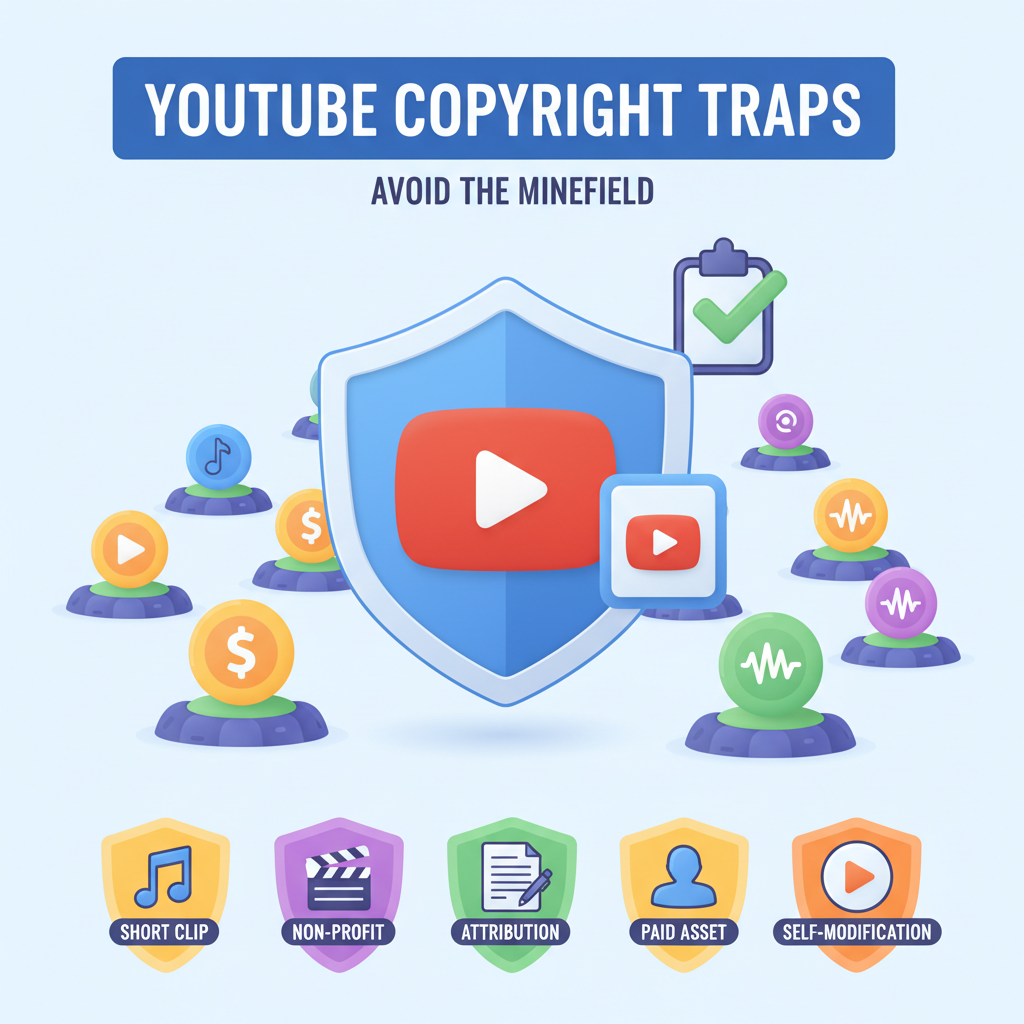
Five Copyright Misconceptions Creators Must Avoid
The “Short Clip Trap”
Misconception: “I only used a few seconds of music/movie clips, that should be fine, right?” Truth: There is no “X-second rule” on YouTube. Copyright law focuses on whether the portion you used is “Substantial.” Even if it’s just a few seconds, if it’s the “heart” or “most essential part” of the original work, or can be detected by the Content ID system, it can still constitute infringement.
The “Non-Profit Trap”
Misconception: “My video isn’t monetized; I’m just sharing, so using others’ content is fine.” Truth: Non-profit use is a favorable factor in “fair use,” but it does not exempt you from all copyright restrictions. Even if you’re not making money, using others’ content still requires permission, unless your use clearly meets other strict fair use criteria.
The “Attribution Trap”
Misconception: “I credited the copyright owner in the video description and linked to the original, so that’s fine.” Truth: For most copyrighted content, simply providing attribution is not enough to gain usage rights. Attribution is only effective when the content itself falls under a Creative Commons license or when you’ve obtained explicit permission (Specific License) and that permission requires attribution. Otherwise, you’re still infringing.
The “Paid Asset Trap”
Misconception: “I paid for music/video clips from an asset library, so I can use them however I want on YouTube.” Truth: Licenses for purchased assets usually have scope-of-use restrictions. You need to carefully read the license agreement to confirm whether your permission includes “YouTube/Digital Media/Commercial Use.” Many asset libraries differentiate between personal use, commercial use, online video use, and other levels of licensing. Blindly using them can lead to invalid licenses.
The “Self-Modification Trap”
Misconception: “I pitched down the music, or mirrored/sped up the video, so Content ID won’t recognize it, right?” Truth: YouTube’s Content ID system is highly advanced; it can recognize content that has undergone simple modifications through sophisticated digital fingerprinting technology. These “clever tricks” are almost ineffective against Content ID and will still result in copyright claims.
Conclusion
The best strategy to avoid copyright traps is to “ask for permission first” and always maintain a cautious and responsible attitude. Before uploading any video, cross-check against this list. Minimizing copyright risk is essential for a long and smooth YouTube creative journey.