Introduction
In the world of YouTube creation, sometimes you need to quote or use content from others. This is where the “Fair Use” doctrine acts like a double-edged sword: it grants creators a certain degree of freedom but is also fraught with ambiguity and risk. What exactly is Fair Use? Where are its boundaries? This article will guide you through the four key factors for determining fair use, helping you navigate copyright infringement risks in your creative work.
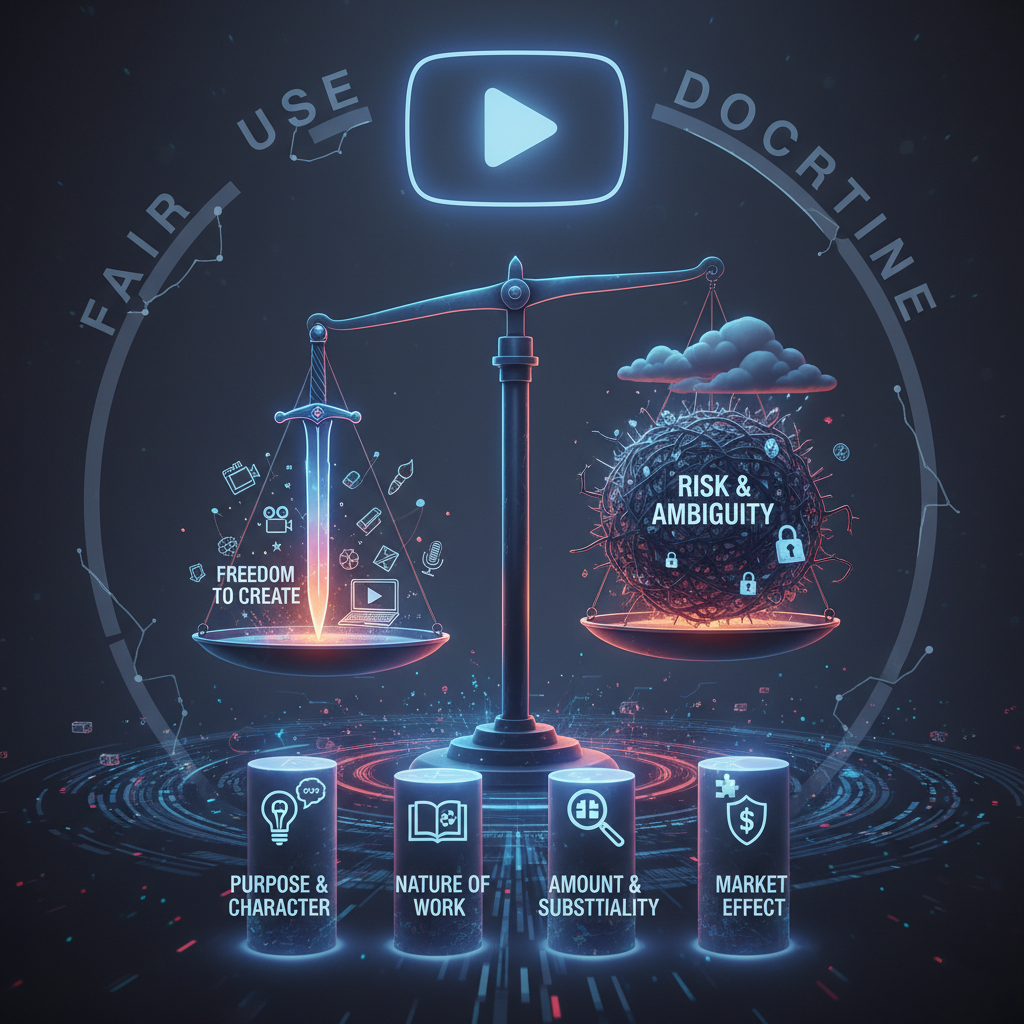
The Four Key Determining Factors of Fair Use
There’s no fixed formula for “Fair Use.” U.S. copyright law uses four factors for comprehensive judgment. Courts weigh all factors, rather than focusing on just one, when evaluating.
1. Purpose and Character of the Use
This is one of the most frequently discussed factors.
- Transformativeness: Does your use add new expression, meaning, aesthetic, or information to the original work? If you simply copy and paste, it’s highly unlikely to be fair use. For example, a commentary video or an educational video that analyzes, deconstructs, or uses the original for teaching purposes is more likely to be considered fair use.
- Commercial vs. Non-Profit: Non-profit, educational uses are generally more favorable for fair use than purely commercial uses. However, this is not absolute; even commercial videos can be deemed fair use if they are highly transformative.
2. Nature of the Copyrighted Work
The type of original work you use also impacts the determination of fair use.
- Factual vs. Fictional: Using factual works (e.g., news reports, scientific papers) is generally more favorable for fair use than using fictional works (e.g., novels, movies).
- Published vs. Unpublished: Using published works is more favorable for fair use than using unpublished works, as copyright holders have the right of first publication.
3. Amount and Substantiality Used
How much of the original work did you use? Was that part the “heart” of the original?
- Amount: Generally, the less of the original work you use, the better.
- Substantiality: Even if you use only a small segment, if that segment is the “heart” or “most memorable part” of the original (e.g., the most iconic hook of a song), it may still be considered infringement. You need to ensure the portion you use is necessary and reasonable for the purpose of your new work.
4. Effect Upon the Potential Market
This is a very important factor in fair use.
- Does your use substitute the potential market value of the original work? For example, if your video freely provides movie clips that would otherwise require paid viewing, this could harm the copyright owner’s commercial interests.
- You need to prove that your use will not cause substantial harm to the original work’s sales or potential market.
Conclusion
Fair use is a complex and subjective area. Many creators on YouTube misunderstand it, for instance, believing that adding a “no infringement intended” disclaimer is effective, or that using short clips is always fine. These are common misconceptions! The best approach when quoting others’ content is to always strive for transformativeness and carefully evaluate the four factors. If you’re unsure about whether your use qualifies, it’s always best to obtain permission first.